
Shower Leak Repair Melbourne: Regrouting, Epoxy Grout, Clear Membranes or a Full Rebuild?
A leaking shower does not always need a full bathroom renovation. But it does need the right diagnosis.
Some leaks begin at failed silicone or worn grout. Others are caused by loose tiles, damaged junctions, poor drainage falls, a waterlogged substrate, or failed waterproofing behind the tiles. Plumbing leaks are a separate possibility and should be ruled out before tiled-shower or waterproofing work is quoted.
At Capstone Tiling, we inspect first, explain the likely leak path, and recommend the least invasive repair that suits the condition of the shower. We work with homeowners, landlords, property managers and body corporate managers across Melbourne.
For a closer look at our service, see our leaking shower repairs in Melbourne.
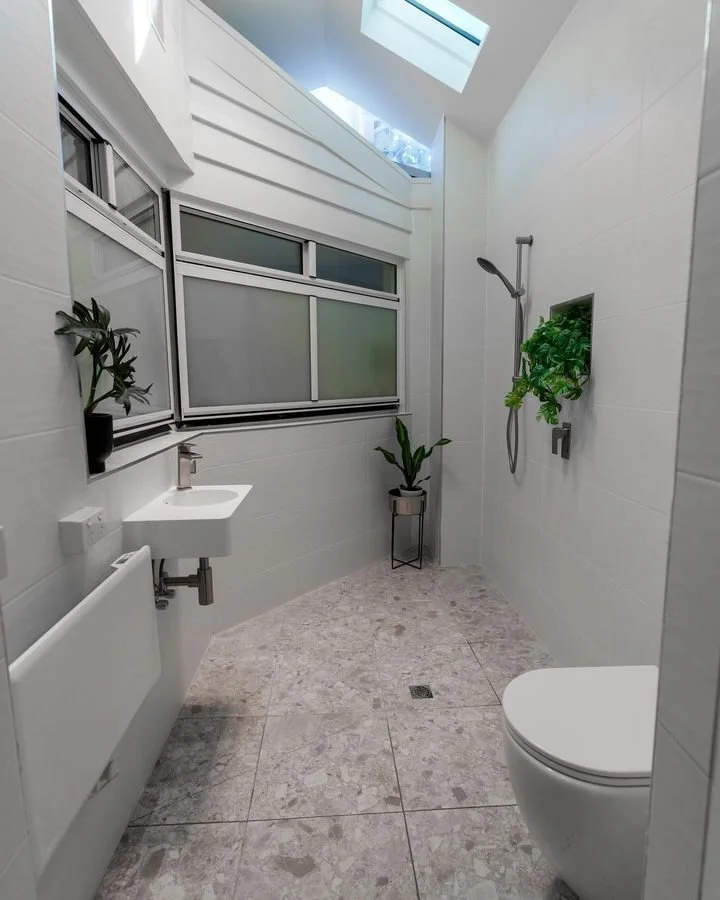
Bathroom renovation completed by Capstone Tiling
First: find the likely source of the leak
Choosing the wrong repair can cost more in the long run. A low-disruption regrout may not solve a failed membrane behind loose tiles. Equally, a complete rebuild may be unnecessary if water is entering through a failed silicone joint.
During an inspection, we look at the shower floor and walls, grout, silicone, corners, wall-to-floor junctions, the screen and hob, and signs of movement or water damage. Common warning signs include:
- Damp walls, swollen skirting boards or a mould smell outside the bathroom
- Water stains below or beside the shower
- Cracked, missing or repeatedly failing grout
- Split, lifting or mouldy silicone
- Loose, hollow or “drummy” tiles
- Efflorescence, cracked floor tiles or a shower floor that moves or squelches
- Carpet or flooring outside the bathroom becoming damp
Wet-area waterproofing is designed to stop water reaching dry areas and causing mould or building damage.[1] If there is any chance the leak is coming from pipes, taps, mixers or the drain, a plumber or leak detector should assess that first.
Your shower leak repair options
Replace failed silicone
Silicone is used at corners, wall-to-floor junctions, shower-screen edges and other points where surfaces can move. Over time it can shrink, split, lift or become mouldy.
Best for: a localised leak at a corner, screen edge or bath junction when tiles and grout are otherwise sound.
What to expect: old silicone is removed, the joint is cleaned and prepared, then new wet-area silicone is applied. It is a fast, low-disruption repair, but it only treats the sealant joint. It will not fix water travelling under tiles or failed waterproofing behind them.
Typical downtime: often one day of work, plus curing time before the shower can be used.
2. Cement regrouting
Grout can wear away, crack or become porous. Regrouting removes deteriorated grout and replaces it with suitable new grout, with silicone replaced where required. Capstone commonly uses ARDEX FG 8, a flexible coloured grout with mould-resistant and water-repellent properties for 1–8 mm joints.[10]
Best for: sound showers where worn, missing or cracked grout appears to be the surface-level weakness.
What it cannot do: grout joints are not a substitute for a waterproofing membrane.[11] Regrouting may not solve a leak where tiles are loose, the screed is wet, falls are poor, or waterproofing has failed behind the tiles.
Typical downtime: one to two days, depending on the shower and curing requirements.
3. Epoxy regrouting
Epoxy grout is denser and less absorbent than cement grout. Mapei describes Kerapoxy Easy Design as a two-component, non-absorbent, mould-resistant epoxy grout suitable for tile joints up to 15 mm.[9]
Best for: a shower with stable tiles and substrate where failed grout is the main weakness, and the owner wants a more durable grout joint.
Important limitation: epoxy grout is not a new waterproofing membrane. It does not repair concealed membrane failure, a waterlogged screed, failed adhesive, moving tiles, poor falls or plumbing leaks.
Typical downtime: two to three days, depending on preparation, application and curing.
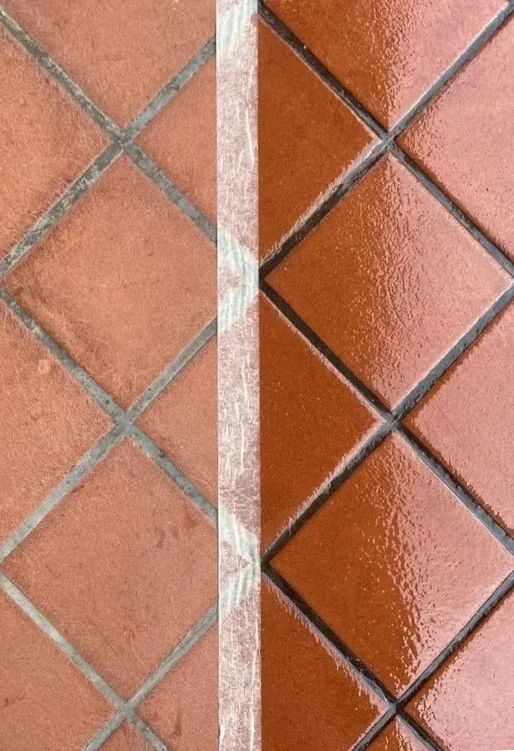
An example of a non-protected compared to LeakSafe protected surface
4. Clear waterproofing membrane over existing tiles
For a tiled surface that is sound and stable, an over-tile clear membrane can provide a no-demolition remedial waterproofing option. Capstone Tiling’s LeakSafe repair is a two-part clear membrane system applied over the prepared tiled area.
The process may include regrouting and replacing failed silicone first, followed by membrane application and curing. It keeps the existing tile finish while adding a remedial waterproofing layer over the surface.
Best for: sound tiled showers where the likely leak path suits an over-tile repair and the owner wants to avoid full demolition.
Not suitable for: loose or hollow tiles, a moving floor, wet or damaged substrate, poor falls, a failed base or hob that needs rebuilding, or hidden damage that requires tile removal.
Typical downtime: several days. A common scope is one day of regrouting where needed, followed by two days of LeakSafe application, with the shower ready by the end of the week.
Learn more about our waterproofing services.

5. Localised tile and waterproofing repair
Sometimes a contained area behind the tiles needs to be opened. In this case, affected tiles are removed, the substrate is checked and prepared, the waterproofing detail is repaired where practical, and the area is retiled and sealed.
Best for: a contained failure where surface work is not enough and the surrounding shower is sound.
Considerations: matching older tiles can be difficult, and waterproofing tie-ins can be complex. If damage is widespread, a local patch may not be the durable answer.
6. Shower base, hob and junction repairs
The base, hob, screen edge and wall-to-floor junctions are common leak paths because they handle water and movement. Depending on the condition behind the tiles, these areas may need failed silicone or grout removed, tiles opened, and waterproofing or junction details repaired.
Best for: contained leaks around the base, hob or junctions where the adjoining tiles and substrate remain stable.
7. Full shower strip-out and rebuild
A full rebuild is the right call when the failure is below the tiled surface. It can include removing tiles and affected linings, repairing the substrate, rebuilding the shower base or walls where needed, installing a new waterproofing system, then retiling and sealing.
A rebuild is usually the safest option when there are:
- Loose or hollow tiles, failed adhesive, major movement or a squelching floor
- Waterlogged screed, damaged plasterboard, rotten or swollen timber
- Poor falls to the waste, widespread waterproofing failure, or a cracked base/hob
- Repeated leaks after surface repairs
It is more disruptive than regrouting or an over-tile membrane, but it addresses the shower from the substrate up. For this pathway, see our shower rebuilds.
At-a-glance: which option may suit?
| If the likely issue is… | A repair to consider | When to look beyond it |
|---|---|---|
| Split or failing silicone | Silicone replacement | Water is getting under tiles or there are wider signs of damage |
| Worn or missing grout with stable tiles | Cement or epoxy regrouting | Tiles, substrate or waterproofing are failing |
| A sound tiled surface and a need to avoid demolition | LeakSafe clear membrane repair | Tiles are loose, the floor moves, falls are poor, or the substrate is damaged |
| A contained issue behind tiles | Localised tile and waterproofing repair | Damage is widespread or the leak path cannot be isolated |
| Failed membrane, damaged substrate or repeated repair failure | Full shower rebuild | — |
Epoxy grout vs a clear membrane: what is the difference?
Epoxy grout and a clear membrane solve different problems.
Epoxy grout improves the grout joints. It may reduce water absorption through those joints where the shower is otherwise sound. A clear membrane is a broader remedial waterproofing layer applied over a prepared tiled surface.
Neither is a universal fix. Both should be ruled out where tiles are loose or hollow, the screed is waterlogged, the base is cracked, the substrate is damaged, the floor moves, falls are poor, or plumbing has not been ruled out.
The practical question is not “which product is best?” It is “where is the water getting through, and is the shower stable enough for this repair?” If the problem is a failed waterproofing system, the repair needs a waterproofing solution.
When regrouting is not enough
Regrouting can improve the shower surface and may reduce water entry through deteriorated joints. It is not, however, a replacement for waterproofing behind the tiles.
We recommend looking beyond regrouting when you can see loose or hollow tiles, movement cracks, damp linings, swollen timber, efflorescence, water outside the shower, poor drainage falls, a waterlogged floor, or a history of regrouting that did not stop the leak. Removing old grout from a shower with failed adhesive can also make tiles loosen further.
What standards mean for an older leaking shower
Waterproofing requirements, products and construction practices have changed over time. In Victoria, the NCC provides the framework for relevant building work; NCC 2025 has applied to relevant new projects from 1 May 2026, subject to transition arrangements.[4]
For clients, the key principles are straightforward: shower floors need waterproofing, wall and floor junctions and penetrations matter, materials must be compatible, surfaces must be properly prepared, and falls to the waste matter. The NCC 2022 Housing Provisions state that shower walls must be waterproofed to at least 1800 mm above the floor substrate.[2]
This does not mean every older leaking shower must be rebuilt. It does mean a contractor should clearly explain whether they are offering a surface repair, a remedial waterproofing repair, or a full rebuild.
For broader bathroom work, visit our bathroom renovations.
Questions to ask about warranties
Australian Consumer Law gives customers automatic guarantees for services, including that services are performed with due care and skill.[6][7] Any written warranty is an additional promise; it does not replace those rights.[8]
Before accepting a repair, ask:
- Does the warranty cover leaks, materials, labour and return visits?
- Is it a manufacturer’s product warranty, an installer’s workmanship warranty, or a leak-free guarantee?
- What happens if building movement, loose tiles, poor falls, damaged substrate, cracked tiles, failed silicone or plumbing is involved?
- Will the contractor inspect a reported issue and explain whether it relates to the agreed scope?
Capstone’s warranty terms depend on the agreed scope and shower condition. As a general guide, basic regrouting and epoxy regrouting include a one-year workmanship and product warranty; suitable LeakSafe repairs include a three-year leak-free warranty, with some scopes extending to three to five years; and full shower rebuilds include a seven-year warranty. Your written quote will set out the applicable scope, conditions and exclusions.
How Capstone Tiling approaches leaking shower repairs
We begin with the shower, not a pre-set product. We inspect grout, silicone, corners, junctions, the base and hob, tile condition, movement and signs of water damage. We also check for obvious plumbing concerns before quoting tiled-area or waterproofing work.
Then we recommend the least invasive option that makes sense. That could be silicone replacement, cement or epoxy regrouting, a LeakSafe clear membrane repair, localised tile removal, or a full rebuild. We do not present basic regrouting as a waterproofing solution, and we do not claim every leak can be repaired without removing tiles.
Capstone Tiling works across Melbourne’s south-east, Bayside and inner suburbs, including Hampton, Bayside, Port Melbourne, Black Rock, Kew and Box Hill.
Frequently asked questions
Can a leaking shower be repaired without removing tiles?
Yes—if the shower is sound and the leak path suits a surface or over-tile remedial repair. Silicone replacement, regrouting, epoxy grout or a clear membrane may be appropriate. Loose tiles, damaged substrate, poor falls or concealed membrane failure may require tiles to be removed.
Is epoxy grout enough to stop a shower leak?
Sometimes, where grout failure is the main problem and the shower is otherwise stable. It is not a replacement for failed waterproofing behind tiles.
Is regrouting a waterproofing repair?
No. Basic regrouting is a surface repair. It improves grout joints but does not install a new waterproofing membrane.
How long does a shower leak repair take?
Silicone replacement can take a day. Regrouting and epoxy regrouting often take one to three days. LeakSafe repairs usually take several days, including preparation and curing. A focused shower rebuild often takes about a working week, depending on the scope and site conditions.
When should a shower be rebuilt?
Consider a rebuild where tiles are loose, the floor moves, the screed is waterlogged, falls are poor, the substrate is damaged, or waterproofing has failed behind the tiles.
Do I need a plumber or a waterproofer?
If pipes, taps, the mixer or drain may be the source, arrange a plumber or leak detector first. Once plumbing has been ruled out, the problem may sit in the tiled surface, joints, membrane, base or substrate.
Need help with a leaking shower in Melbourne?
Capstone Tiling can inspect the tiled area, explain the likely cause and recommend a repair that fits the condition of the shower. Contact Capstone Tiling to send photos or organise the next step.
References
1. [Building and Plumbing Commission — Waterproofing of wet areas](https://www.bpc.vic.gov.au/resource-hub/industry-updates/waterproofing-of-wet-areas)
2. [National Construction Code — Part 10.2 Wet area waterproofing](https://ncc.abcb.gov.au/editions/ncc-2022/adopted/housing-provisions/10-health-and-amenity/part-102-wet-area-waterproofing)
3. [National Construction Code — Waterproofing in houses](https://ncc.abcb.gov.au/ncc-navigator/waterproofing-houses)
4. [Victorian Government — Understanding standards and regulations](https://www.building.vic.gov.au/before-you-start-building/building-standards-in-victoria)
5. [Standards Australia — AS 3740:2021 Waterproofing of domestic wet areas](https://www.standardsau.com/standards/as-3740-2021/)
6. [ACCC — Consumer rights and guarantees](https://www.accc.gov.au/consumers/buying-products-and-services/consumer-rights-and-guarantees)
7. [Consumer Affairs Victoria — Services not done with due care and skill](https://www.consumer.vic.gov.au/consumers-and-businesses/products-and-services/problem-with-a-service/services-not-done-with-due-care-and-skill)
8. [Consumer Affairs Victoria — Types of warranties](https://www.consumer.vic.gov.au/consumers-and-businesses/products-and-services/refunds-repairs-and-returns/warranties/types-of-warranties)
9. [Mapei Australia — Kerapoxy Easy Design](https://www.mapei.com/au/en/products-and-solutions/products/detail/kerapoxy-easy-design)
10. [ARDEX Australia — ARDEX FG 8](https://ardexaustralia.com/product/ardex-fg-8/)
11. [Tile Council of North America — Ceramic Tile FAQ](https://tcnatile.com/resource-center/faq/ceramic-tile/)