
Melbourne Leaky Balconies: The Real Fixes, Myths, and Proven Solutions
Introduction
Leaking balconies are an alarmingly common issue in Australian homes – in fact, “water damage (in balconies) routinely tops the list of defects” reported to building authorities[1]. What starts as a small leak can end up causing serious problems for internal ceilings, walls, and even a building’s structural integrity if left unchecked[2][3]. Typical warning signs include water stains on the ceiling below the balcony, lifting or hollow-sounding tiles, visible efflorescence (white powdery salt deposits) on tile surfaces, or persistent pooling water after rain[4][5]. Any of these signs can indicate that the balcony’s waterproofing is failing and moisture is seeping where it shouldn’t. So what actually stops balcony leaks – and what doesn’t? In this article, we’ll cut through common myths and explore the real fixes and proven solutions for leaking balconies, with insights from industry experts in Melbourne’s balcony waterproofing scene.
Common Causes of Leaking Balconies in Melbourne
Why do balconies start leaking in the first place? Often it comes down to construction and design issues:
· Building Movement and Cracks: Over time, natural building movements (settling, thermal expansion) can crack tiles or the slab, opening pathways for water ingress[6]. These shifts can also tear or delaminate the waterproofing membrane beneath the tiles. Even tiny cracks in grout or caulking let water sneak under the surface, where it can accumulate and wreak havoc[7].
· Poor or Missing Waterproofing: In many cases the root cause is an inadequate or absent original waterproofing membrane. If the membrane was not installed correctly or didn’t extend to all critical areas (upturns, corners, drains), leaks are almost inevitable[8]. One Victorian study found that insufficient waterproofing was a chief cause in roughly 19% of balcony defects examined[9]. A poorly applied membrane (or none at all) simply cannot protect the structure long-term.
· Blocked or Bad Drainage: Clogged weep holes, scuppers or drain outlets will cause water to pond on the balcony surface instead of draining away. Likewise, if the drainage design is inadequate or outlets are too small, water accumulates and overwhelms the membrane[10]. Standing water will exploit any weakness in grout or seals and eventually penetrate through. Surveys have noted that many balcony leaks stem from “improper drainage systems leading to water ingress issues”[11][9].
· Inadequate Falls (Slope): A balcony needs a slight slope toward the drains (typically at least 1:100 or more) so water runs off. When balconies are built flat or with minimal fall, water tends to linger and pool[10]. Over time this pooled water breaks down grout and finds its way into the substrate[5]. Australian standards emphasize the importance of proper gradient – AS 4654.2 (the external waterproofing standard referenced by the NCC 2022) specifies that external surfaces must have adequate falls to prevent ponding and seepage[12]. A balcony that doesn’t meet these fall requirements is essentially a leak waiting to happen.
In short, most leaks boil down to water being where it shouldn’t due to construction faults. According to the National Construction Code (NCC) 2022 and AS 4654.2, balconies above living spaces must be properly waterproofed with compliant membranes and detailing[13] – but when that doesn’t happen, problems arise. An analysis by Cladding Safety Victoria found that around 73% of balcony defects were caused by water ingress from poor waterproofing or drainage workmanship[14]. It’s clear that preventing leaks starts with good design and installation up front. But if you’re already dealing with a leaky balcony, what are your options now? Let’s explore the main fixes and how they measure up.

Another Brightong balcony renovation completed by Capstone Tiling
The Main Fixes for Leaking Balconies in Melbourne
Basic Maintenance
Sometimes the simplest “fix” is basic preventative maintenance. This isn’t a repair for an active leak so much as routine upkeep to stop issues before they start. Basic balcony maintenance involves regular inspections and minor touch-ups: clearing out clogged drains and gutters so water can flow off freely, patching any hairline cracks in grout, and re-sealing any degraded caulking at joints or edges. Keeping the drainage clear is especially important – blocked balcony drains or scuppers will cause water to back up and pool, increasing the risk of leaks[15][16]. By periodically removing leaves and debris and confirming water can drain away, you prevent one of the major causes of balcony water problems.
When appropriate: Basic maintenance is best for balconies that are not currently leaking but could use a little care. Think of it as preventative medicine. If you’ve noticed early signs like slight grout cracking or a bit of ponding during heavy rain, but no water has made it inside yet, proactive maintenance can halt further deterioration. It’s also suitable after a more extensive repair, to maintain the renewed waterproofing.
Pros: It’s low cost and minimally disruptive. A few hundred dollars of upkeep (or a bit of DIY elbow grease) a couple times a year can stave off much costlier repairs[17][18]. Maintenance tasks like re-caulking corners or applying a fresh bead of silicone at railing posts help keep the existing waterproofing intact. Overall, it’s about prevention – addressing little issues (like a cracked grout line or blocked drain) before they turn into big leaks.
Cons: Maintenance alone won’t fix an active leak or a failing membrane. If water is already leaking through to below, simply cleaning drains and re-sealing some joints is unlikely to stop it. Think of it as preserving a healthy balcony, not curing a sick one. It also requires consistency – neglecting regular upkeep is actually a common underlying cause of membrane failure[19]. In summary, basic maintenance is essential and cost-effective for leak prevention, but it isn’t a standalone remedy for a balcony that’s already leaking significantly.
Degrout, Epoxy Regrout, and New Silicone
One popular method to address a leaky balcony without major construction is to remove and replace all the grout and perimeter sealants on the surface. This process involves “degrouting” – grinding out the old, deteriorated grout between tiles – and then regrouting with a high-performance epoxy grout. At the same time, any cracked or mildewed silicone caulk along expansion joints and wall junctions is raked out and replaced with fresh, flexible sealant. The idea here is that by renewing these surface seals, you re-establish a waterproof barrier between the tiles, preventing water from seeping down to the membrane. Epoxy grouts like Mapei Kerapoxy Easy Design are impervious (non-porous) and very durable, so they won’t absorb moisture or crumble the way old sand-cement grout can[21]. The new silicone at edges accommodates movement better than hardened old caulk, hopefully keeping those junctions watertight.
Best for: This approach works only if the underlying membrane is still intact and the leaks are happening due to failures in the grout or sealant. For example, if you have a balcony that was properly waterproofed originally but after years the grout lines have cracked and the perimeter caulking has shrunk or peeled, water might be seeping through those gaps (even though the membrane below hasn’t been breached). In such cases, an epoxy regrout can effectively “reseal” the surface and stop the leaks. It’s also a common aesthetic refresh – discolored or patchy grout is removed and replaced, improving the appearance while solving minor leakage. Homeowners often try this as a first step for mild leaks because it’s less expensive and faster than a full rebuild.
Pros: Regrouting with a quality epoxy provides a waterproof seal between tiles, significantly boosting the water resistance of the tiled surface[21]. Unlike traditional grout, epoxy is non-porous and won’t readily crack or wash out, even under harsh weather or standing water. This means less moisture can penetrate down to the membrane. Epoxy also resists staining and mould, so the balcony looks cleaner and stays healthier. New silicone at the wall upturns and joints can flex with building movement, maintaining a tight seal. Another benefit is speed – a skilled team can regrout and reseal a balcony in a day or two, with minimal disruption to you. It’s a lot quicker than tearing up tiles. And the cost, while not trivial, is far lower than a full rebuild (typically on the order of $1,500–$2,500 for an average balcony, depending on size) – a worthwhile investment if it extends the life of your balcony by a few years.
Cons: The big caveat: regrouting does not repair the membrane. If the waterproof membrane underneath the tiles has failed or there is already water trapped below, doing an epoxy regrout is essentially a surface Band-Aid. It might stop water from entering from above for a while, but it won’t dry out any moisture already under the tiles. In fact, some experts warn that simply sealing over a balcony that has a leaking membrane can trap water in the substrate, potentially leading to “concrete cancer” (rusting of the slab reinforcement) or tile delamination down the line[23][24]. In practice, epoxy regrouting is a short-to-medium term fix. It addresses the symptoms (leaky grout lines) but not the root cause if deeper waterproofing is compromised. Additionally, if your balcony continues to experience building movement or if the substrate is unstable (loose “drummy” tiles, etc.), even epoxy grout can crack eventually[25]. In summary, this method can buy time and often does stop minor leaks, but it’s not a cure-all. If you suspect a major waterproofing failure, a surface regrout will likely be only a temporary reprieve.
(For reference, professional balcony regrouting typically uses products like Mapei’s Kerapoxy, an acid-resistant two-part epoxy grout known for its high durability and water impermeability. Using a reputable product is key to ensure the new grout is truly waterproof and long-lasting.)
Clear Membrane Coating (LeakSafe™ System)
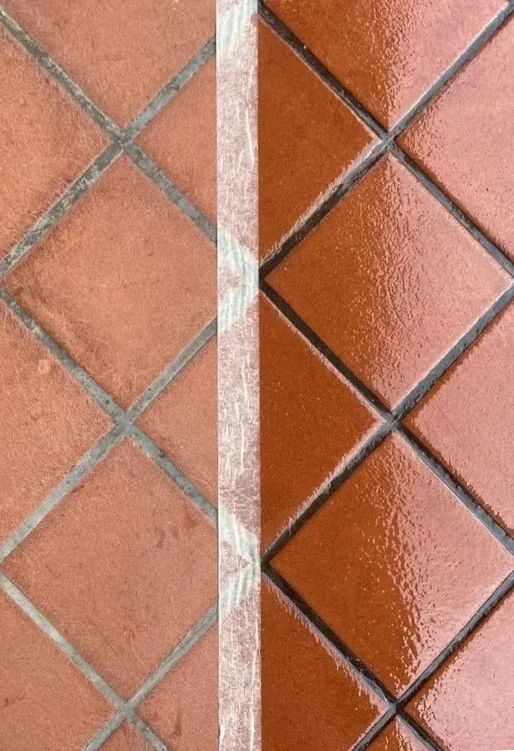
Example of before and after application of LeakSafe™ on a balcony
A more advanced solution – one that lies between a quick regrout and a full rebuild – is to apply a clear waterproof membrane over the existing tiled surface. Capstone Tiling’s LeakSafe™ system is an example of this approach. The process involves thoroughly cleaning the balcony, removing any loose or drummy tiles, and usually doing an epoxy regrout and new silicone as prep. Then, instead of stopping there, a transparent liquid membrane is applied across the entire surface (and up the wall junctions) to create a new continuous waterproof layer on top of the tiles[26]. The LeakSafe™ membrane is flexible, UV-stable, and slip-resistant when cured, so it essentially seals the balcony against leaks without changing its appearance much – you can still see your tiles through it. Importantly, this over-tile membrane is engineered to adhere to the tiles and grout and accommodate structural movement (expansion, contraction), so that hairline cracks won’t form when the building shifts[26]. In Capstone’s case, the system comes with a warranty (3 years) and is designed as a long-term fix for balconies that are otherwise sound but suffering from water ingress.
Pros: The clear membrane approach offers a way to fully waterproof the balcony without removing tiles. This is a huge advantage in terms of convenience and cost – no jackhammering old tiles, no dust and debris, and the project can often be done in a day (plus curing time for the membrane). For homeowners, that means minimal disruption to your living space. Aesthetically, it often improves the look: since the process typically includes regrouting, your grout lines are refreshed, and the clear coat can give the tiles a mild “wet look” sheen that makes the whole balcony look new again. Functionally, a quality clear membrane (like LeakSafe™ or similar products) restores a true waterproof barrier to the balcony surface. When applied correctly, the membrane stops water ingress completely, even through grout, while remaining flexible over time. In essence, it “resets the clock” on your balcony’s waterproofing. Longevity can be quite good (5+ years or more) if the balcony is maintained, and re-coating down the line is straightforward. Many owners opt for this when the tiles are in good condition and they want a lasting leak fix without the cost and downtime of a full rebuild.
Cons: This solution is not suitable for every situation. If the balcony has major structural issues – for example, large cracks in the concrete substrate, significant deflection, or very poor original construction – simply coating over with a membrane won’t address those underlying problems. Any loose tiles (“drummy” sounding areas) ideally should be removed and re-bedded before applying the membrane, otherwise those sections could fail. Additionally, if there is water already deeply saturated in the screed or structure, a clear membrane will seal it in; proper surface preparation and drying is crucial to avoid trapping moisture. (Contractors will often moisture-test or even use heat guns to dry out the substrate after removing old grout, before the membrane application.) Another consideration: while the membrane itself is clear, it can slightly change the look of the tiles (a subtle glossy finish), and it must be kept clean to remain transparent. Over time, you may need to reapply the clear coat (often every 5–7 years, similar to resealing a deck) – the NCC even recommends inspecting and reapplying such waterproofing every few years as needed[29]. Lastly, cost can be a factor: an over-tile membrane system is not cheap – typically ranging around $3,000–$8,000 for an average balcony when done professionally – reflecting the material technology and skilled labor required. It’s still cheaper than a full rebuild, but more expensive than a simple regrout. The membrane must also be done by qualified applicators to ensure adhesion and performance. In summary, a clear waterproofing membrane is the best long-term fix short of rebuilding for a balcony that is structurally sound. It tackles the waterproofing problem head-on (unlike just regrouting) and spares you a demolition. Just be sure the balcony is a good candidate (tiles intact, substrate stable) and that the system used is compliant with Australian standards.
(For more on Capstone’s LeakSafe™ clear membrane repair in Melbourne, you can read their detailed overview on the leaky balcony repair Melbourne (LeakSafe™) service. It’s an innovative solution developed from experience with Melbourne’s climate and construction patterns.)
Full Balcony Renovation
When all else fails – or when a balcony is simply at the end of its lifespan – the ultimate solution is a full balcony strip out and rebuild. This is the “start from scratch” approach: the tiles and bedding screed are completely removed, any damaged substrate (e.g. rotten plywood or cracked concrete topping) is repaired or replaced, a brand new waterproofing membrane is installed to meet current standards, and then the balcony is re-tiled and finished anew. Essentially, it’s a proper renovation where the balcony is rebuilt to be as good as new (or better, since you can correct any original design flaws like adding more drainage or improving the fall/slope in the process). A full renovation is the most invasive and costly option, but it addresses every underlying issue rather than masking them. Contractors, such as licensed waterproofers and tilers, will ensure the new construction complies with AS 4654.2 and the latest building codes – giving you a balcony that should perform well for many years or decades to come.
When necessary: This level of repair is warranted if the balcony’s structure or waterproofing is fundamentally compromised. Signs you might need a full rebuild include: widespread cracked or hollow tiles (indicating the substrate or adhesive has failed), a spongy or uneven substrate (common with wood-framed balconies where water has rotted the underlayment), inadequate drainage or fall that cannot be fixed externally, or a waterproofing membrane that has completely failed across the entire area (often evidenced by multiple leak points and water damage in various spots). Also, if previous patch repairs have been attempted and the balcony still leaks, it’s often a clue that the only solution left is to remove everything and start over. Sometimes the choice to renovate is also about longevity – if a balcony is, say, 20+ years old and has recurring issues, an owner may opt to renovate it fully rather than continue with piecemeal repairs. Building inspectors or engineers will typically recommend a reconstruction if they see structural red flags. In short, if the balcony is unsafe or unsalvageable in its current state, renovation is the right fix.
Process: A full balcony renovation involves several stages. First, the area is demolished: tiles, grout, and screed are jackhammered up down to the base (concrete slab or timber sheeting). The bare structure is then inspected – any cracks in a concrete slab are repaired (e.g. epoxy injection), or any rotted timber sheeting is cut out and re-sheeted with new exterior-grade substrate. Next, the new waterproofing system is applied. This usually means priming the surface and then installing a multilayer flexible membrane that extends continuously across the floor and up the walls/door upturns, with reinforcement at joints and drains. The membrane installation is done by a licensed waterproofer and must pass a water ponding test (filling the area with water for 24+ hours to ensure no leaks)[30][31]. Once the membrane is certified, the tiler comes in to lay new tiles (or whatever surface finish is chosen), ensuring proper falls to the drains. New expansion joints and perimeter seals are installed. Essentially, you end up with a brand new balcony from the waterproofing perspective. Capstone’s description of their balcony renovation service notes that it “includes everything from tile removal to sheeting to waterproofing and re-tiling, delivering a fresh new look and long-term protection”[32] – which captures the all-inclusive nature of this fix.
Pros: This is the “permanent” fix. By rebuilding, you eliminate all hidden issues – wet screed, compromised membrane, structural damage – in one go. A properly rebuilt balcony will meet modern standards (giving you confidence in its compliance and safety) and comes with new warranties on materials and workmanship (often waterproofing membranes have 10+ year product warranties, etc.). You also have the opportunity to upgrade the balcony’s design and materials during the process: for instance, you might choose to incorporate better drainage or a nicer tile selection or even redesign the space. From a value perspective, a new, leak-free balcony adds to your property’s longevity and can prevent thousands of dollars in collateral damage (no more worrying every time it rains heavily). Essentially, you’re resetting the life of the balcony for another decade or two of trouble-free use. While the upfront cost is high, it pays off over the long run by removing the constant need for repairs. Think of it as a long-term investment in the property’s integrity and your peace of mind. As one industry guide bluntly put it: if the membrane is shot, the gold standard is to “do a full remedial waterproofing process…this is the only way to guarantee a permanent fix” that truly solves the leak[23][33].
Cons: Cost and disruption are the main downsides. A full balcony renovation is labor-intensive and can be expensive – commonly in the $10,000–$20,000+ range for an average-sized balcony when done professionally. (The exact cost depends on the size, height/access, finishes chosen, etc., and in some cases high-end jobs can exceed this. For context, a basic balcony makeover might be only $1k–$3k, but a major rebuild with new membrane can easily run into the tens of thousands[17][34].) The demolition and rebuild process can take anywhere from two to four weeks or more, during which time the balcony is a construction zone and unusable. There will be noise (demolition of tiles is loud), dust, and workers on site. If the balcony is an upper level or over a living space, you’ll need to coordinate carefully to protect the areas below and around it. Essentially it’s a small construction project at your home. Another con is that mistakes can be costly – it’s critical to use experienced, licensed professionals; a bad rebuild could leave you with continued leaks and a lot of money wasted. Always ensure the waterproofer provides a compliance certificate and that materials comply with AS 4654.2 and AS 3740 (for internal wet areas, if the balcony connects to an interior room)[35][36]. Lastly, because it’s a major renovation, you might even need body corporate or council approvals (e.g. in a multi-unit building), adding to the effort. In summary, a full renovation is the most disruptive and costly fix – but it completely solves leaking issues by essentially building a new, leak-proof balcony. It’s the best choice when partial measures won’t cut it.
Comparing the Solutions — Cost, Longevity & Disruption
To recap the above fixes, here’s a side-by-side comparison:
Solution Average Cost Time to Complete Expected Lifespan
Basic Maintenance $200–$500 1 day (periodic) Ongoing (preventative)
Pros
– Very low cost
– Prevents issues from developing
Cons
– Won’t stop existing leaks
– Requires regular effort
Solution Average Cost Time to Complete Expected Lifespan
Epoxy Regrout + Silicone $1,500–$2,500 1–2 days 1–3 years (patch fix)
Pros
– Quick, no major demolition
– Aesthetic refresh
– Waterproofs grout lines
Cons
– Only a surface repair
– Doesn’t fix membrane
– May fail with building movement
Solution Average Cost Time to Complete Expected Lifespan
LeakSafe™ Clear Membrane $3,000–$8,000 1 day + curing time 5+ years (long-term)
Pros
– Full waterproof barrier
– No tile removal needed
– Improves look (clear coat)
Cons
– Not for structural damage
– Moderate cost
– Requires re-coating after several years
Solution Average Cost Time to Complete Expected Lifespan
Full Balcony Renovation $10,000–$20,000+ 2–4 weeks 10+ years (permanent)
Pros
– Complete fix (new membrane)
– Brings balcony to code
– Opportunity to upgrade design
Cons
– High cost & most invasive
– Long downtime
– Needs licensed professionals
Note: Costs are approximate for a typical residential balcony in Melbourne and can vary widely. Always obtain quotes for your specific situation. Longevity assumes proper maintenance (e.g. re-sealing as needed)[18][37].
As the information aboe shows, there is a clear trade-off between cost, convenience, and longevity. Basic maintenance and quick regrouting jobs are inexpensive but mostly short-term. On the other end, a full rebuild is expensive and disruptive but yields a essentially new balcony with a long lifespan. The clear membrane over-tile solution (LeakSafe™ or similar) occupies a middle ground – it’s a bit of an upfront investment, but it provides a genuine long-term waterproofing fix without demolition, which for many homeowners hits the sweet spot of value.
Choosing the Right Fix for Your Balcony
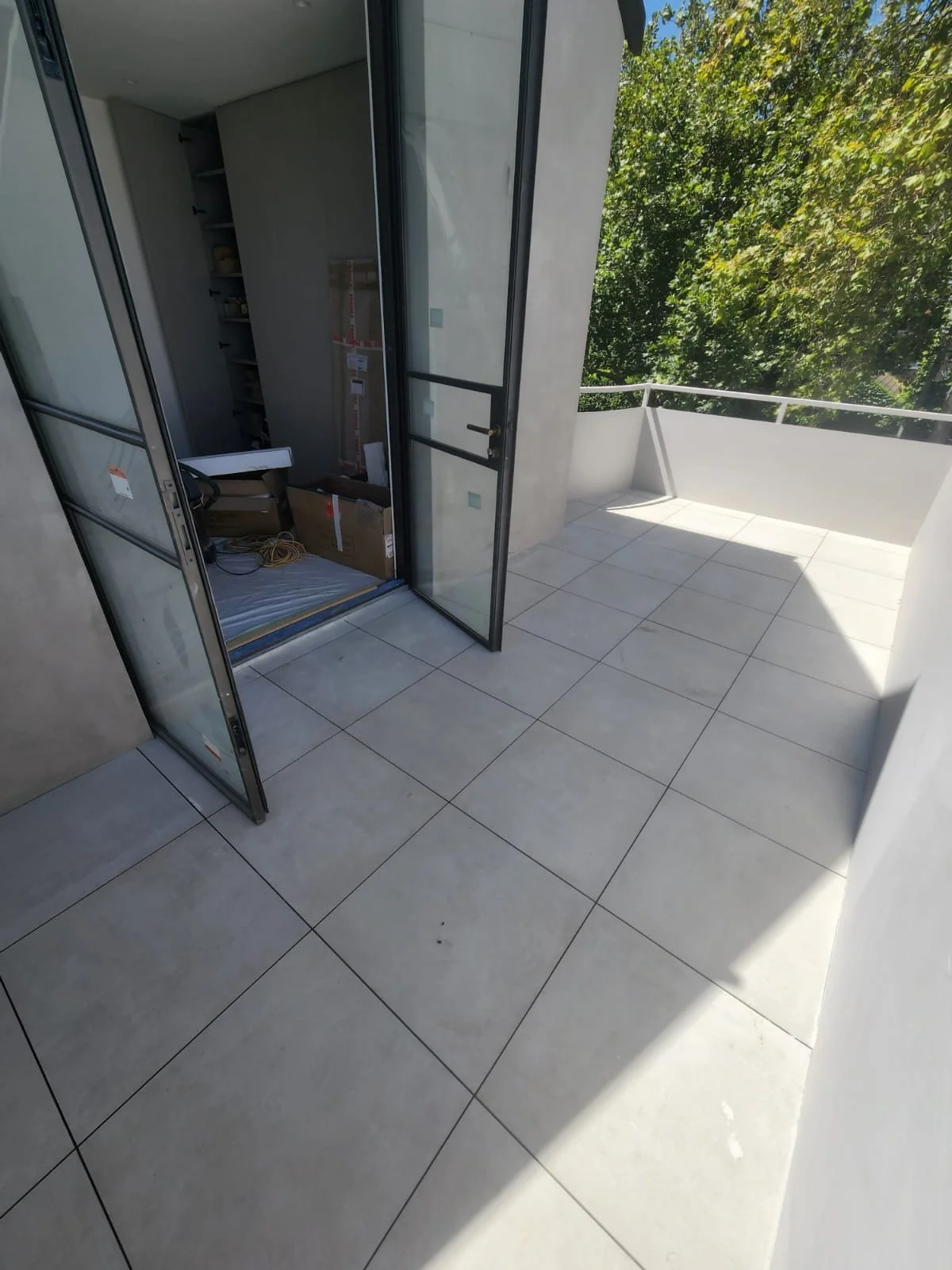
Another Bentleigh balcony renovation completed by Capstone Tiling
How do you decide which approach is best for your leaking balcony? The choice comes down to the extent of the problem and your long-term plans:
Minor leaks or purely cosmetic issues (e.g. hairline grout cracks, a bit of mildew around edges, no evidence of membrane failure): In this case, a targeted surface repair like epoxy regrouting and new caulking can do the trick. If your balcony is generally in good shape and you catch the leaks early, regrouting can reseal the area and buy you a few more years of service. Just go in with realistic expectations – this treats the “symptoms,” not the underlying membrane. It’s suitable when you’re not ready for a big reno yet but need a quick fix. Keep a close eye on the balcony after, and continue with maintenance to maximize the lifespan of the repair.
Sound structure but leaking waterproofing (e.g. tiles and structure are solid, but water is getting through the surface into the rooms below): Here, an over-tile waterproofing system like LeakSafe™ is often the best option. If the tiles aren’t drummy and the only issue is the failed waterproofing layer, applying a compliant membrane coating over everything addresses the core problem (waterproofing) without the cost of rebuilding[26]. This is ideal for balconies that are otherwise fine – you preserve your investment in the existing tiles and get a new lease on life. Just ensure the product and installer you use are reputable, as the success of this method depends on proper application. It’s also wise to stick with licensed waterproofers for such work; even though in some states (like VIC) a specific license isn’t mandated, you should get a conformity certificate that the work meets AS 4654.2[35]. The waterproofing must be done right, or you’ll be back to square one.
Structural or widespread failures (e.g. balcony is leaking in multiple spots, tiles are coming loose, substrate is suspect, falls are wrong): A full renovation is the sound choice. It might be tempting to try quick fixes, but if the balcony has fundamental issues, you’ll end up spending more in the long run by delaying the inevitable. By doing a proper rebuild, you fix everything at once – new membrane, new tiles, correct slope, proper drainage, etc. This is especially true for older balconies (10+ years) where water ingress has caused secondary damage like concrete spalling or timber rot[39][9]. Importantly, a full rebuild by a professional will ensure compliance with current standards, which protects you as the homeowner. The VBA (Victorian Building Authority) frequently finds that waterproofing and drainage details are where builders slip up[40] – so when you hire someone to rebuild, choose a contractor with a good track record in balcony waterproofing. Check that they follow the NCC guidelines and use materials to AS 4654.1/.2 specs. It’s worth the peace of mind.
In all cases, do not ignore the problem. Balcony leaks never fix themselves, and they tend to get worse over time. A small leak can turn into major structural damage if water continues to ingress. If unsure of the extent, you might invest in a professional inspection or leak detection service to diagnose whether you have a membrane failure or just a surface issue[41][42]. This can guide you to the right fix – for example, if an expert finds the membrane is largely fine except one corner, maybe a localized repair will do; but if the whole membrane is shot, you know a regrout won’t cut it. Remember, only two fixes truly restore waterproofing: applying a new membrane (clear coating system) or installing a new membrane under new tiles (full rebuild). Methods that only deal with grout or sealant are interim measures when the membrane beneath is still doing its job.
Also, always use qualified tradespeople for any significant waterproofing work. Australia’s building standards are strict about waterproofing for good reason – it’s one of the leading sources of building defects and litigation. In some states like NSW, any balcony waterproofing must be done by a licensed waterproofer; in Victoria, a compliance certificate is required for works over a certain value[35]. Hiring a pro who knows the standards (AS 4654.2 for external waterproofing, AS 3740 for internal wet areas, etc.) means your balcony will be repaired to last, not just to get through the next rainstorm. It might be tempting to go with the cheapest quote, but as the saying goes, “if you think it’s expensive to hire a professional, wait until you hire an amateur.” Cutting corners on waterproofing can lead to very costly consequences down the track[43].
Preventing Balcony Leaks in Melbourne
Once you’ve gotten your balcony fixed and watertight, you’ll want to keep it that way. Prevention is key to avoiding future leaks and maximizing the lifespan of your balcony. Here are some best-practice tips for balcony maintenance in Melbourne’s climate:
Keep drains and gutters clear: Make it a habit to clean out leaves, dirt and debris from your balcony’s drainage points, downpipes, and any guttering around it. Clogged drains are a leading cause of water pooling on balconies[45]. Especially in autumn when leaves fall, ensure nothing is blocking water from flowing off the balcony. A quick flush with a hose can confirm everything is draining as it should. This simple step can prevent a lot of water ingress risk. Consider installing gutter guards or drain covers to reduce how often you need to clean them[46].
Inspect grout and seals seasonally: Every few months (or at least twice a year), take a close look at the grout lines and caulking on your balcony. Look for cracks, crumbling, or gaps in the grout, and for any peeling or shrunken silicone at expansion joints and where the balcony meets walls. These are early warning signs. Re-grout or re-caulk small areas as needed before they turn into big leaks. A tube of exterior-grade silicone and some patience can reseal corners and penetrations (like around railing posts) – stopping water entry at these vulnerable spots. It’s far cheaper to touch up a bead of sealant than to repair water damage behind a wall. As one waterproofing company notes, lack of upkeep on grout/seals is a common culprit for membrane failures, so doing these minor fixes can literally extend the life of your waterproofing[47][20].
Reapply sealant or membrane coatings on schedule: If your balcony has an over-tile membrane, follow the product’s maintenance schedule. Typically, these need to be inspected and re-coated every few years. For example, a transparent membrane might be refreshed every 5 years to ensure continued performance[29]. Similarly, if you have timber elements or a trafficable membrane, re-sealing at recommended intervals will keep them waterproof. Don’t wait until it fails – proactive reapplication keeps the protection intact. As a guideline, exterior caulking around windows/doors often needs replacing every 5-10 years[48], and balcony membranes should be checked on a similar timeframe.
Ensure water continues to drain correctly: Over time, building settlement or shifting can sometimes alter the slope of a balcony ever so slightly. Or perhaps a new deck covering was added that unintentionally creates a low spot. Periodically observe how water flows during a rain. If you start noticing new puddling areas that weren’t there before, address them – maybe by adding an extra weep hole, or in some cases by installing a grated trench drain at the threshold if water tends to collect there. The goal is to avoid standing water. Even on a well-built balcony, pooling water for days will eventually find a way through. Good drainage and proper fall are your balcony’s best friends (and also requirements under the Australian standards). If needed, consult a waterproofer or builder about retrofitting drainage improvements; sometimes small changes make a big difference.
Protect the membrane from damage: If you have a liquid-applied membrane under your tiles (from a rebuild) or a coating on top, be mindful of any actions that could puncture or compromise it. For instance, when moving heavy furniture or planters, be careful not to drag them and scratch the tile surface (or the coating). If you’re installing things like privacy screens or planters that attach to the balcony, ensure they’re done in a way that maintains waterproofing (penetrations should be properly sealed). Avoid using harsh chemicals or pressure washers that could degrade sealants or membranes unless they are known to be safe for those materials. Essentially, treat your balcony’s waterproof layer with care – it’s thin, so physical damage can happen if you’re not conscious of it.
Regular cleaning and upkeep: Beyond the critical waterproofing elements, general cleaning helps too. Remove mould or algae promptly (a bit of diluted bleach or specialised cleaner can be used on grout/tile – just rinse well). These organisms retain moisture and can eat into grout over time. If you have a tiled balcony, occasionally cleaning the grout and applying a grout sealer can reduce its porosity. Keep an eye on metal elements (railings, scuppers) – rust can indicate water is sitting where it shouldn’t. Basically, pay attention to your balcony. A balcony isn’t a “set and forget” part of the house – it’s exposed to the elements 24/7, so some TLC goes a long way.
By following these preventive measures, you greatly reduce the chance of confronting another leak. Many balcony waterproofing issues arise not from sudden failures but from gradual decay that wasn’t addressed. A weekend afternoon spent clearing drains and renewing a bit of sealant could save you thousands in avoidable repairs. For more guidance, you can refer to professional resources on waterproofing maintenance – for instance, Capstone Tiling offers tips on their waterproofing services page about proper upkeep to prolong the life of a membrane. Staying proactive is the name of the game.
Final Thoughts
Leaking balconies can be a nightmare for homeowners, but as we’ve explored, there are effective solutions at hand – and also plenty of misconceptions. The real fixes ultimately come down to restoring a proper waterproof barrier, either by applying a new membrane (over the tiles or under new tiles) or by rebuilding the balcony with correct falls and drainage. Quick patches like regrouting have their place for minor issues, but they won’t miraculously cure a balcony with serious waterproofing failure. It’s important to recognize when a leak is symptomatic of a bigger problem that needs a long-term solution. The proven approaches (LeakSafe™ coatings or full renovations) might require more investment up front, but they save you from the cycle of repeated leaks and repairs – and protect the structure of your home.
For balconies that are still in good structural condition, a solution like Capstone Tiling’s LeakSafe™ system is arguably the best long-term, no-demolition fix. It provides a new waterproofing layer and extends the life of your balcony without altering its appearance or requiring weeks of work. On the other hand, if your balcony is unsalvageable in its current state, don’t shy away from a full renovation by experts – it will pay off in peace of mind and property value. Always ensure whichever route you take is done in line with Australian standards and by experienced professionals, so you truly solve the problem and get a warranty to show for it.
In the end, a balcony should be an enjoyable asset to your home, not a source of anxiety every time it rains. By addressing leaks with the right fix and following up with good maintenance, you can keep your balcony dry and safe for the long haul. If you’re in Melbourne and dealing with a pesky leaking balcony, remember that help is available. For leaking balcony repair Melbourne homeowners can trust, Capstone Tiling’s LeakSafe™ system offers a clean, lasting solution with minimal disruption – so you can get back to enjoying your balcony without the worry of water damage creeping in. Here’s to staying dry above and keeping the water where it belongs!
[1] [2] [3] [4] [5] [7] Why do we have balconies on buildings? | Arbiter Group | Structural Engineers | Melbourne
https://arbitergroup.com.au/engineering-blog/why-do-we-have-balconies-on-buildings
[8] [14] [40] Leaky bathroom & balcony waterproofing review
https://www.capstonetiling.com.au/blog/waterproofing-failures-in-australia-a-10-year-review
[9] [11] [39] Solution Design Document
[12] [13] Australian Standards for External Waterproofing Membranes
https://endeavoureng.com.au/australian-standard-external-waterproofing/
[15] [16] [45] [46] Essential Tips on Preventing Water Leaks on Your Balcony
https://www.asphalt-step-repairs.com/post/essential-tips-on-preventing-water-leaks-on-your-balcony
[17] [18] [34] Balcony: Size, Functionality, Uses, Furniture And Renovation
https://www.architecturelab.net/house/room/balcony/
[19] [20] [47] Repairs & finishing
https://www.capstonetiling.com.au/repairs-finishing
[21] Kerapoxy Easy Design
https://www.mapei.com/au/en/products-and-solutions/products/detail/kerapoxy-easy-design
[23] [24] [25] [30] [31] [33] [41] [42] Fix Your Leaking Balcony Central Coast: Balcony Waterproofing
https://ensurewaterproofing.com.au/fix-leaking-balcony-central-coast/
[26] [32] Leaky Balcony Repair Melbourne - Capstone Tiling
https://www.capstonetiling.com.au/leaky-balcony
[29] Balcony Waterproofing & Repair in Long Beach, CA | Bay Cities Construction
https://www.baycitiesconstruction.com/balcony-waterproofing-repair-long-beach-ca
[35] [36] [43] How Much Does Waterproofing Cost? [2026]
https://hipages.com.au/article/how_much_does_waterproofing_cost
[37] Balcony Repair & Waterproofing in Belmont Shore | Bay Cities Construction
https://www.baycitiesconstruction.com/balcony-repair-waterproofing-belmont-shore-ca
[48] Decoding the Timeline: When and How Often Should You Re-Caulk?
https://groutrepair.ca/2024/01/17/decoding-the-timeline-when-and-how-often-should-you-re-caulk/